

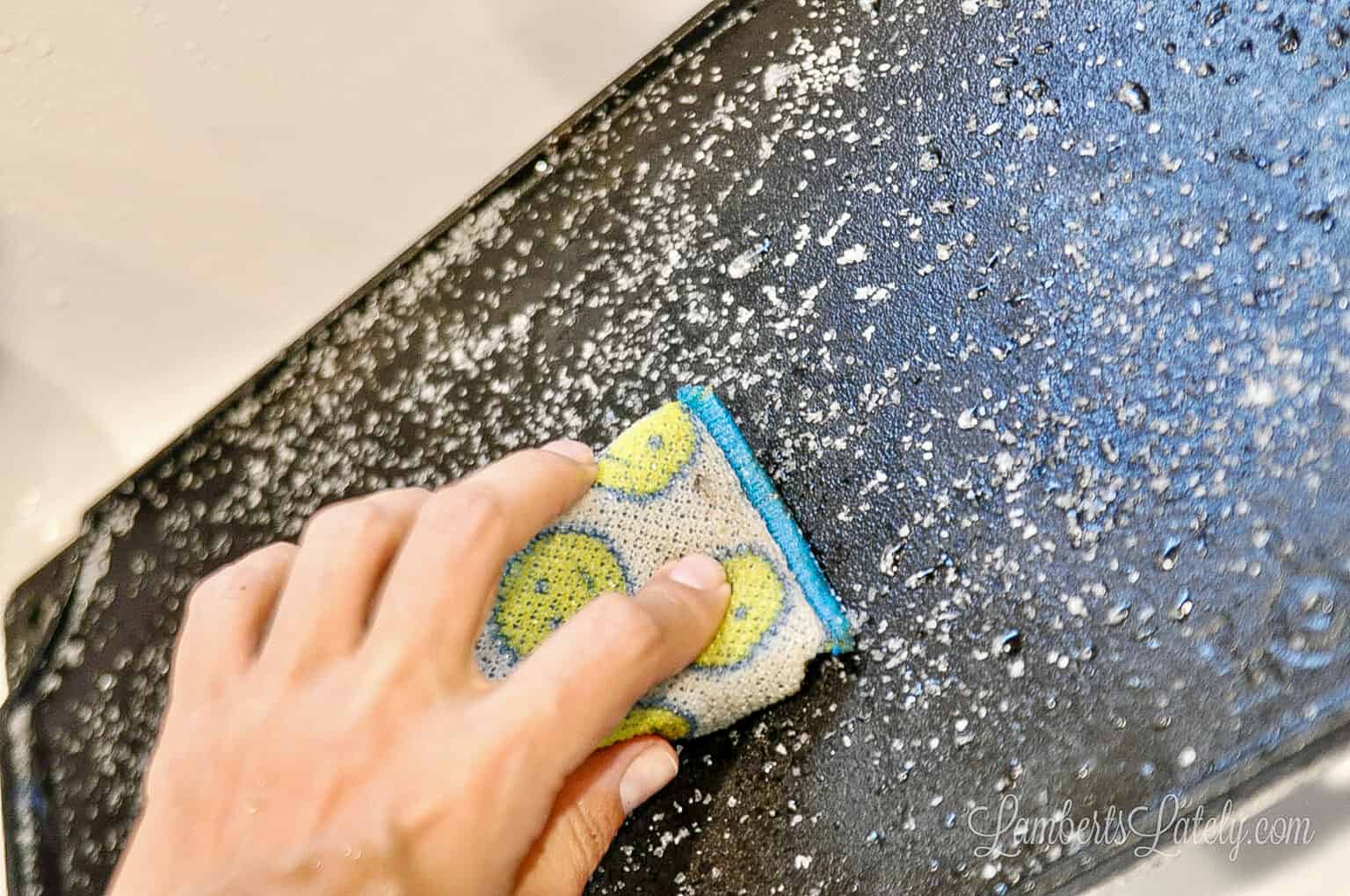
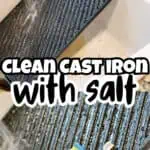
See how to clean a cast iron griddle the easy way, using just salt, water, and oil. This is the best way to clean skillets, pans, and stove grates too! Remove burnt on food, clean rust, and season cast iron with this easy method.
(Affiliate links used in this post. Read more about my link usage here.)
I'll be the first to admit: I'm not a big fan of things that have to be hand-washed. I'm way too dependent on a dishwasher. But there are a few select items items in my home that will be put in a dishwasher over. my. dead. body.
My cast iron is in that collection. (As is my beloved Le Creuset dutch oven...but that's about it.)
Today, we're going to dive into all things cast iron maintenance! This basic method can be used for all kinds of cast iron cleaning, but I use it a ton for the cast iron griddle that sits on our gas stove.
Why is cast iron so special?
Cast iron skillets and griddle plates are high maintenance - but absolutely worth it.
- When washed and seasoned correctly, cast iron develops a hard outer "shell" that makes it extremely durable.
- This shell also creates a natural non-stick surface over time.
- With proper care, cast iron cookware can last for generations.
- Cast iron reaches high heat better than almost any other cooking surface - ideal for grilling steaks, veggies, or eggs indoors.
- It's highly versatile: use it on the stove, then transfer directly to the oven for easy skillet dinners and casseroles.
A cast iron skillet is a unique, must-have piece of cookware in any kitchen - as long as you know how to take care of it.
The Big Rule When Cleaning Cast Iron
The number one rule to remember when cleaning/caring for cast iron is that water is the enemy.
Of course you have to use water to clean. However, you'll want to get rid of it as quickly as possible. Water leads to rust on cast iron, which can damage the cast iron and make it difficult to salvage.

Supplies Needed
- Non-abrasive sponge or chain mail
- Dish soap (without lye or vinegar)
- Coarse salt
- Avocado oil
Step 1: Give it a wash.
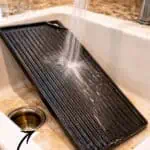
Once you've cooked with your cast iron and made it all dirty, you will want to put in the sink to give it a good wash-down. You should wait until your cast iron is cool to do this.
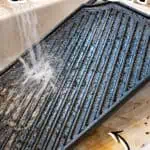
This will get all of the initial burnt-on food off of your cookware. Using hot water (which helps break down gunk and grease), give it a good wash, then...
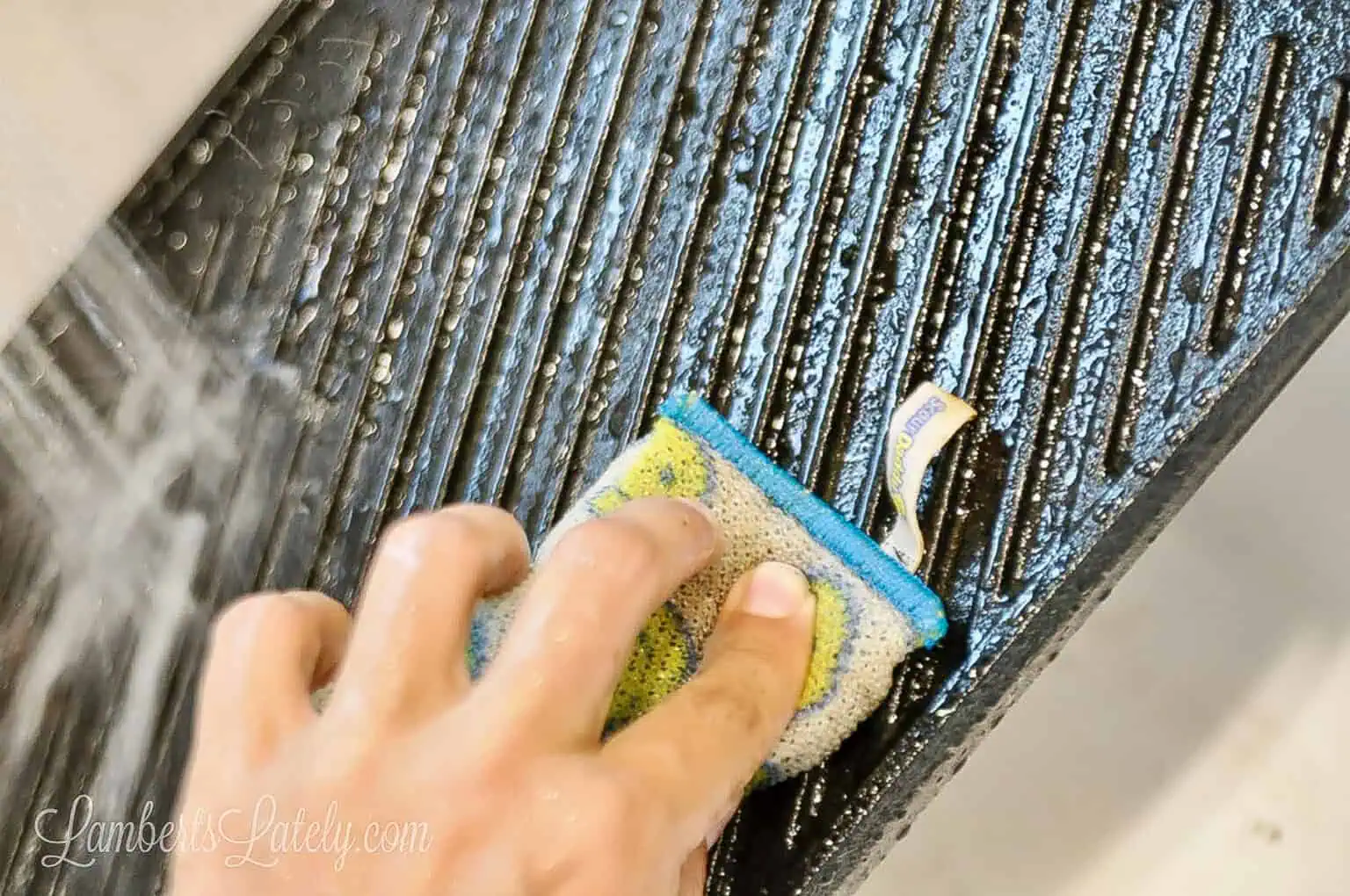
...give it a quick scrub with a little bit of elbow grease. I absolutely love these scour sponges for this (and for general everyday cleaning, for that matter - these are the best sponges!). I also love chain mail for scrubbing cast iron - it's kind of like a huge metal rag that can scrub off stubborn gunk without damaging your seasoning.
If you don't have a scour sponge, just make sure to use a scrubber or brush that isn't too harsh. You want to be able to get the stuck-on food off of your griddle without stripping any seasoning. Something like steel wool absolutely isn't appropriate for this step (but could be used if removing rust - see the bottom of the post for that note.)
Most people will not recommend using any kind of even mild dish soap on cast iron, but funny story - I had the actual Lodge Tik Tok account comment on my video tutorial about this a few years ago.

So, straight from the horse's mouth - you can use soapy water if you really want. Just make sure the soap you're using doesn't include any harsh ingredients (like lye or vinegar) before you use it.
Step 2: Add salt.
Once you finish the quick first scrub with hot water, no need to wipe down the cast iron just yet...you'll need that water for now! Pull out the absolute best cleaning tool you can use on cast iron:
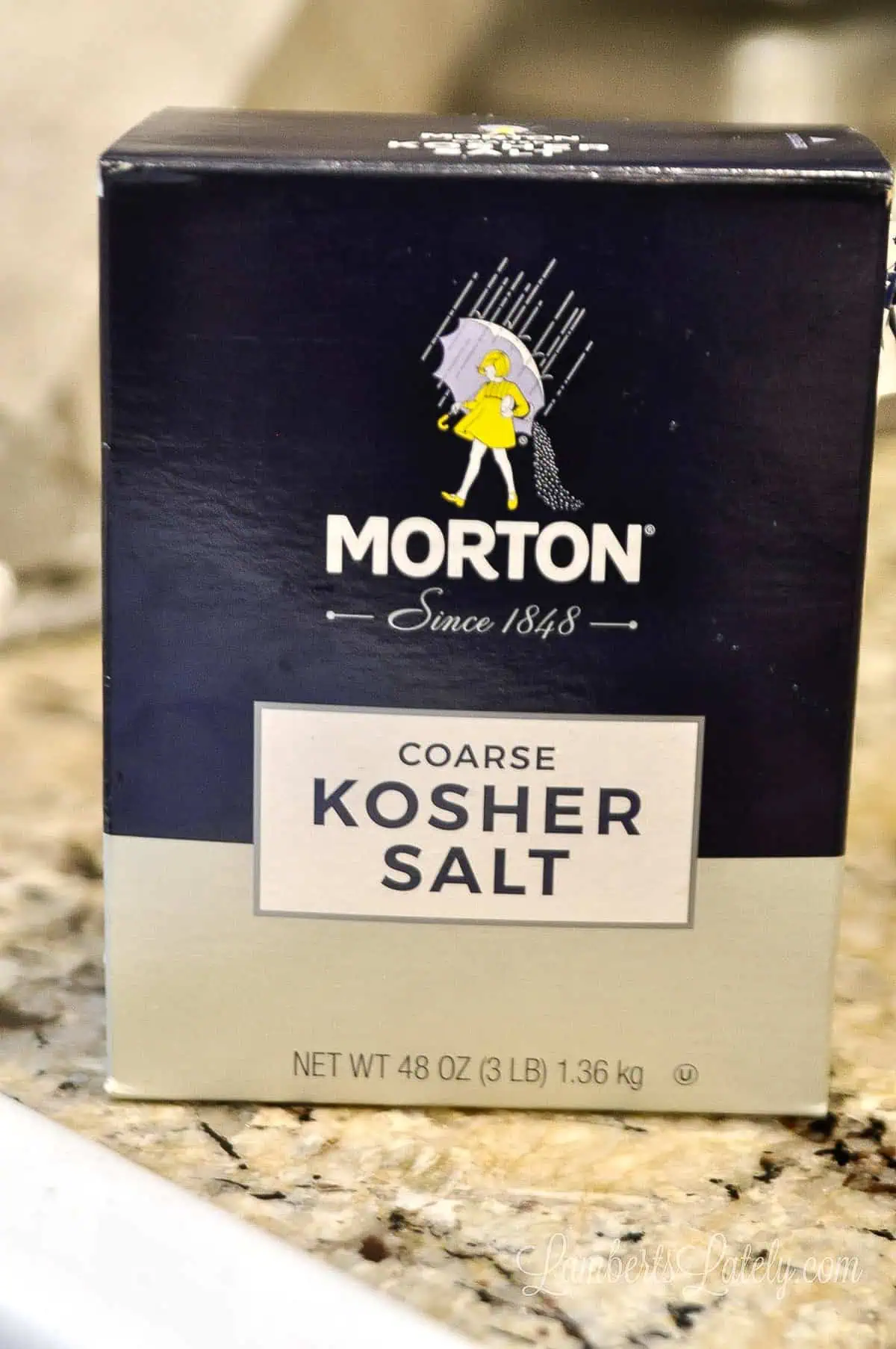
Plain old coarse kosher salt. I keep a big box of coarse salt under my sink just for cleaning and scrubbing tough messes, including all of my cast iron cookware. It's perfect for keeping cast iron skillets and griddles clean.
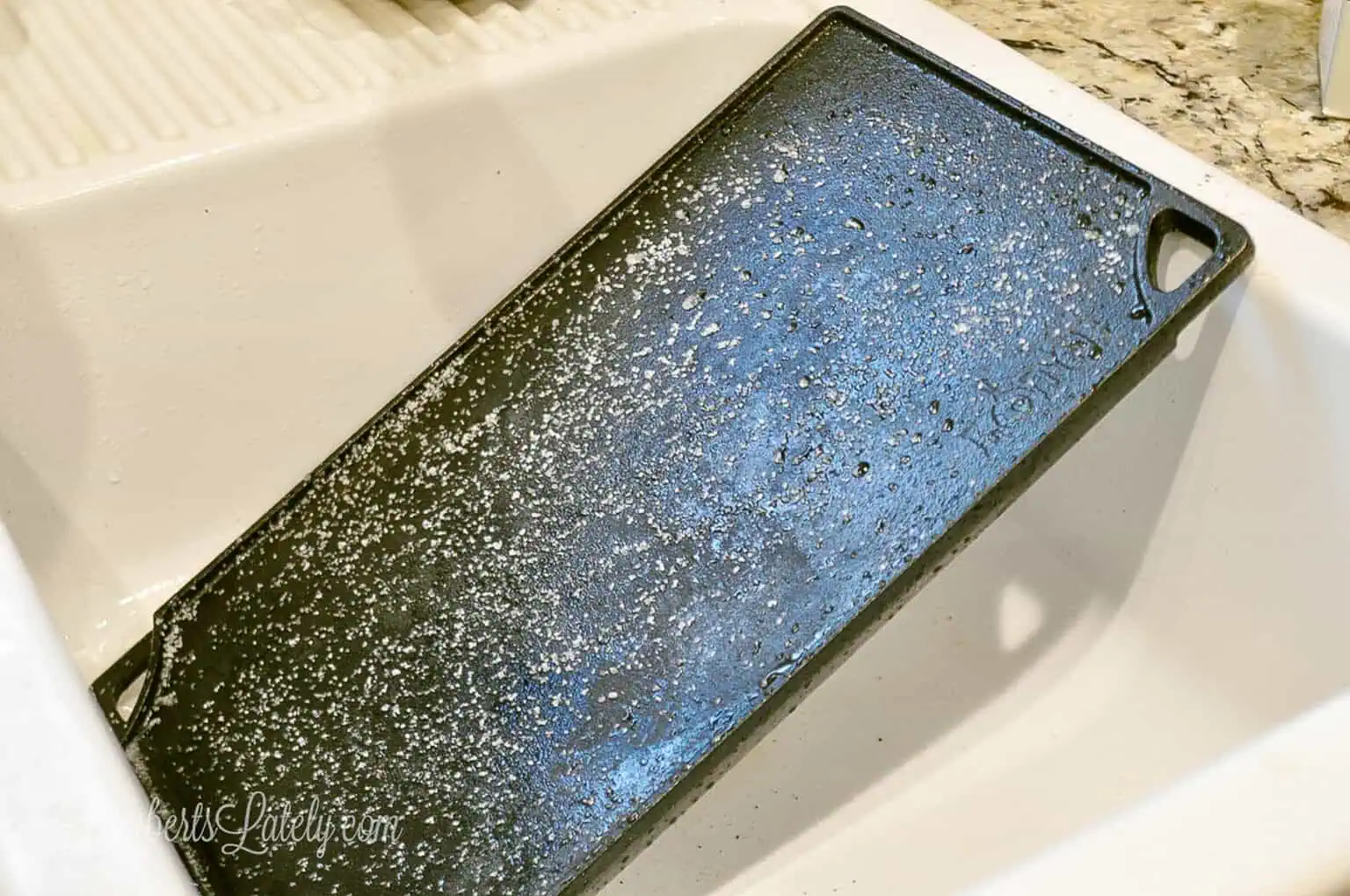
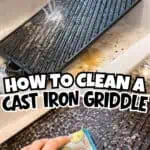
Sprinkle your (still wet) cast iron griddle down with the coarse salt and scrub it in really well with your non-abrasive scrubber.
Again, the scour sponge is perfect for this! Make sure to get into the corners of your cookware. Those edges are notorious for holding onto baked-on food.
Step 3: Rinse & heat.
Rinse the remaining salt off of the griddle and give it a quick wash with warm water. Once you wash it down and all of the salt is gone, do not let it sit in the sink. Instead, take it right back to the gas stovetop.
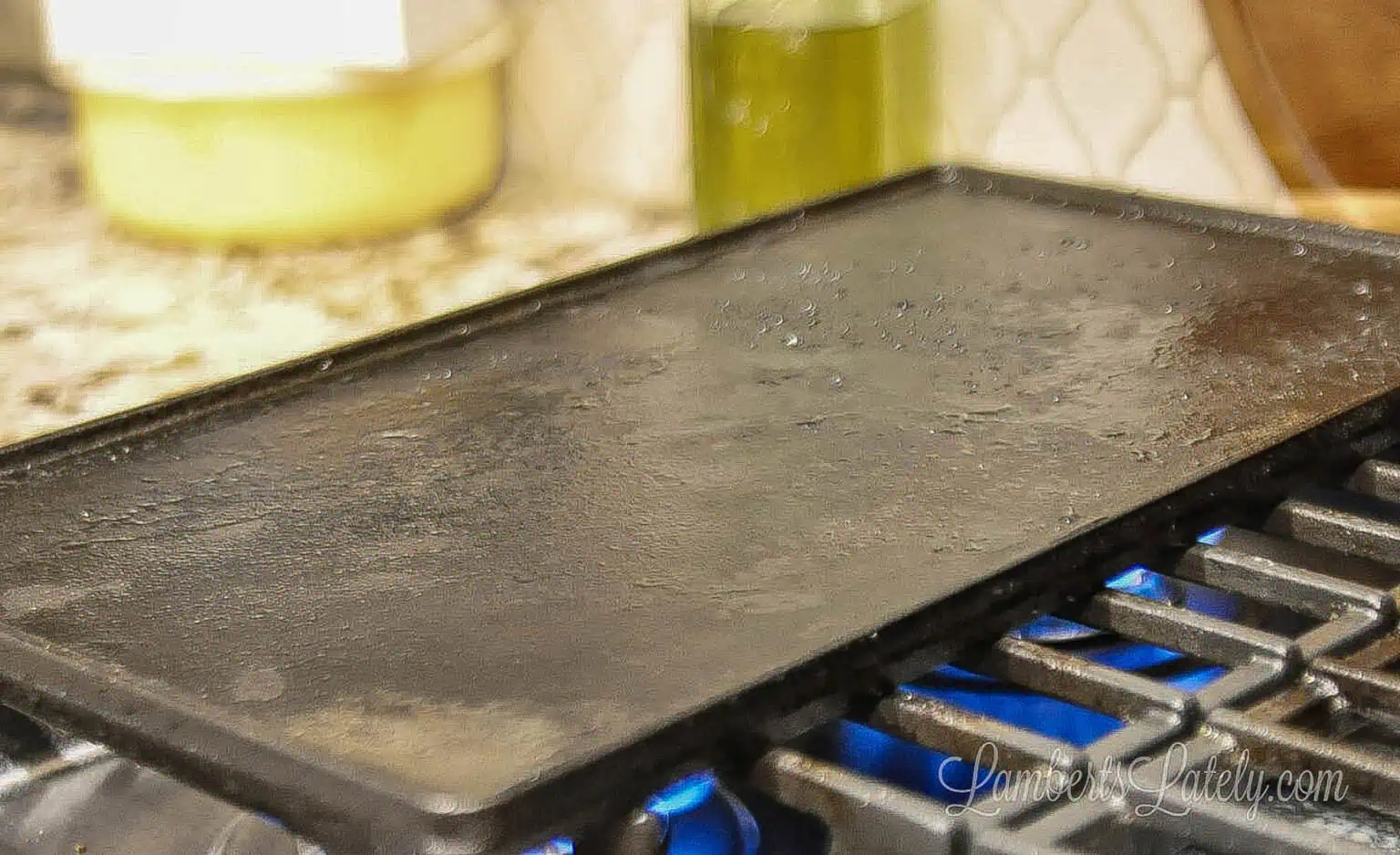
You'll want to get the water off of the cast iron as quickly as possible. Remember: water is the enemy of cast iron.
The most effective way to do this is the put some heat under it to evaporate and moisture off. I turn the heat to medium on our gas stove for maybe 5-10 minutes, just enough to evaporate all of the water. Don't forget about it though!
If you don't have a gas stove, you can also evaporate the water off of your cast iron by placing it in a 350 degree oven on the top rack for a few minutes.
Once you turn the stovetop or oven off, allow the cast iron to cool before moving on to the next step.
Step 4: Season the cast iron griddle.
This is a step you're going to want to do each and every time you clean your cast iron griddle.
Once it is dry, it's going to look a little funky and dry - almost like it's damaged. No worries!
Some of that is leftover salt (totally normal) and some of that might be a little bit of dryness from the cleaning process. This is where you want to season your cast iron well.
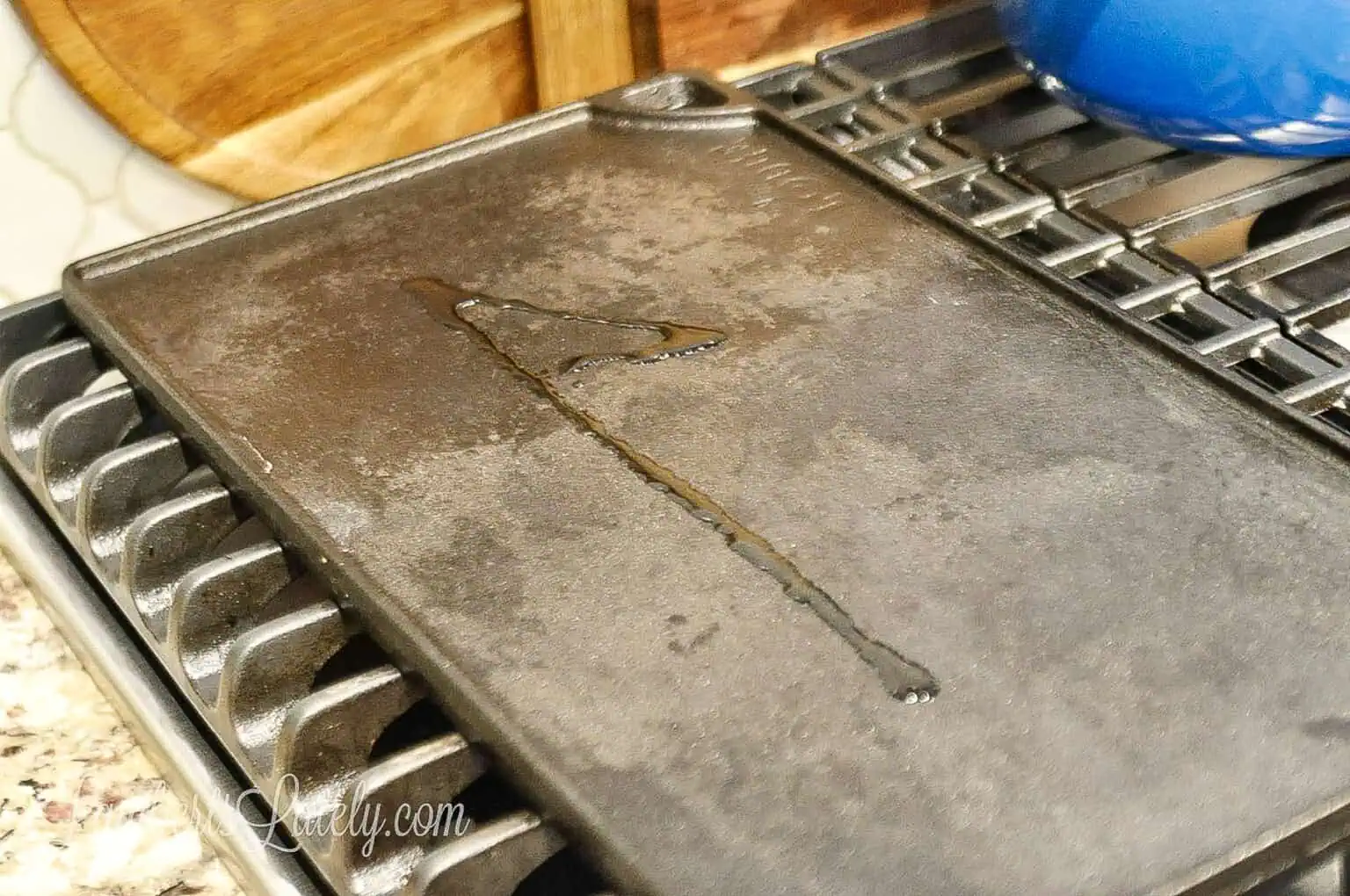
While it's still warm, put a thin layer of oil over the top of the griddle to season it. This will eventually help your cast iron to not only look glossy, but cook into a non-stick surface.
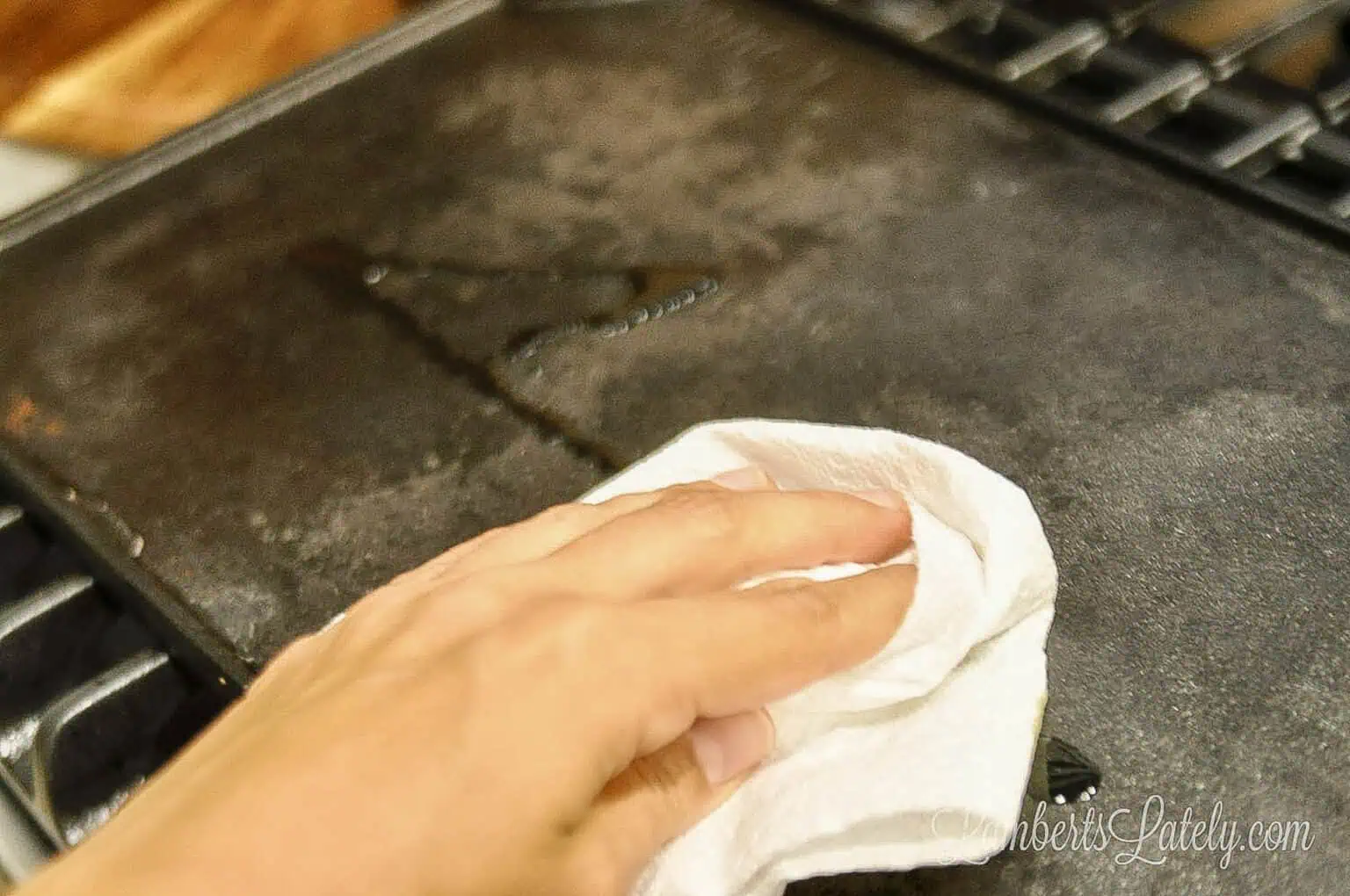
I use avocado oil to do this - it has a really high smoke point and just the kind of fat you need to polymerize on your cast iron (giving it that nonstick finish). You can also use corn, olive, canola, or vegetable oil.
Excess oil really isn't needed, you'll just need enough to properly cover your grill pan or skillet. Just pour a tablespoon or two and buff it in in with a dry towel. If you have a cast iron skillet, make sure to get the outside and handles of the skillet too!
Related: Keep the rest of your gas stove clean with this tutorial on how to make a DIY gas stove liner!
Step 5: Get it hot (again).
Finally, you're going to heat the cast iron griddle again. This is what's going to season your cast iron. Without going into too much detail, heating the fat on the cast iron will give it a tough covering that makes it non-stick and super durable.
I choose to do this on the gas stove top. You can also literally bake your cast iron in the oven for 30 minutes or so at 350 degrees, allowing it to cool completely before removing.
Baking in the oven is especially useful for non-flat cast iron, like a cast iron skillet. You just want to make sure every surface of your cookware gets very hot. Then, let your hot pan cool before the next use.
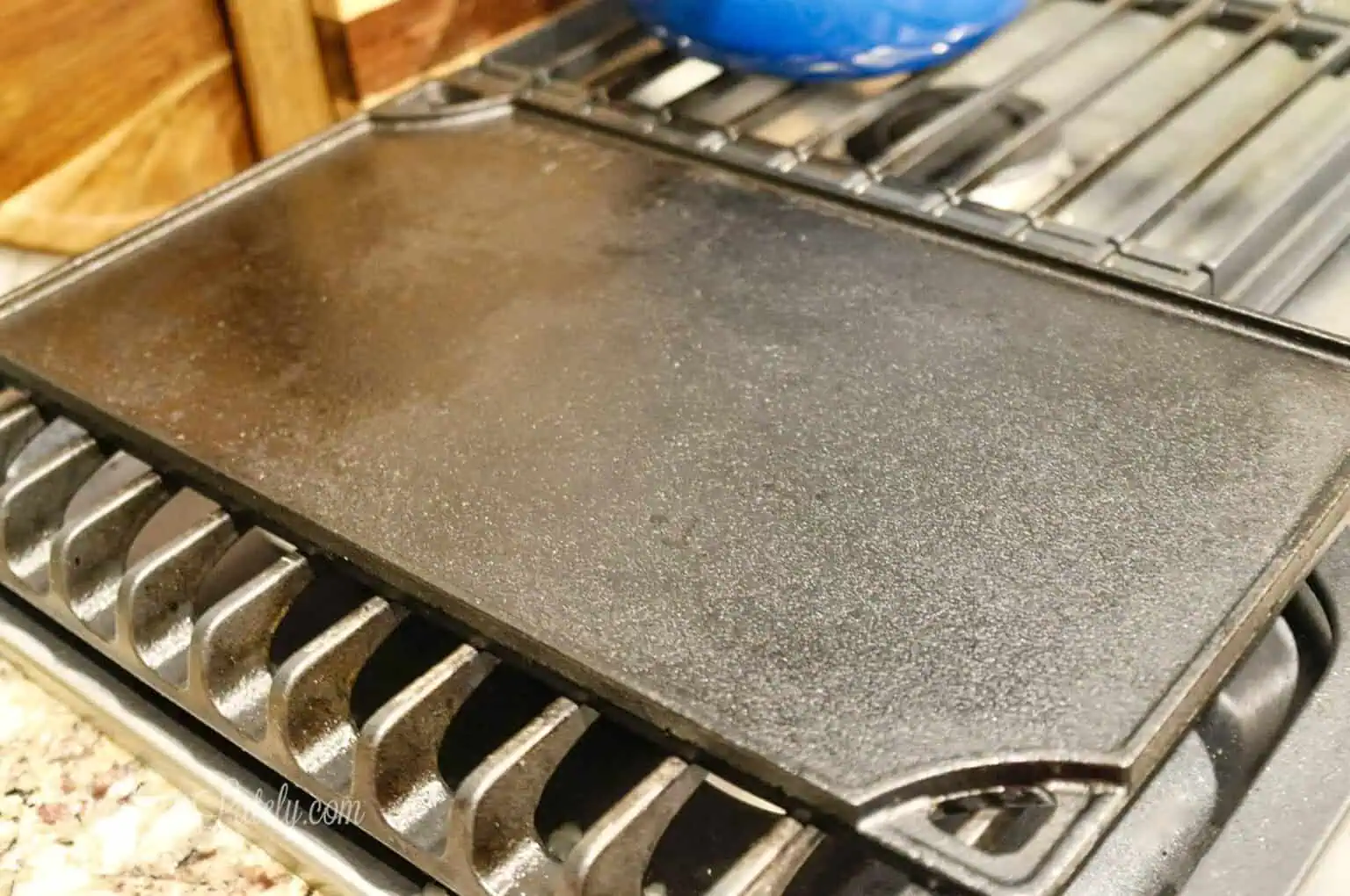
See? Nothing to it! I feel like cast iron is such an intimidating piece of cookware, but I promise - if you learn how to care for it, it will become on of your favorite things to use in the kitchen.
A Note About Rust
I didn't have any rust on my cast iron grill pan in this particular tutorial, but it does happen. Sometimes you might let water sit on cast iron for too long or neglect to season a piece of cast iron cookware. It is damaged at that point, but it is fixable!
If your cast iron skillet or griddle develops rust, simply spray the rust with vinegar and use a harsh scrubber like steel wool to buff out the rust.
If it's just a small bit of rust on a piece of cookware you use often, it will probably only be on the surface. That kind of rust is pretty easy to remove. (Rust that has gotten into the actual cast iron is another story and much more complicated to remove.)
Once the surface rust is gone, start from the beginning of this tutorial to properly clean and season your cast iron.
More Quick Tips for Cleaning & Maintaining Cast Iron
- We don't wash the griddle every time we use it. Especially if we're grilling non-messy foods, we skip this cleaning process. I typically only do this maybe once a month, or if we cook something especially greasy/gunky.
- Clean any grease off of the cast iron while it is still warm (but not hot) in between full cleanings.
- Careful with acidic foods. Things like tomatoes or vinegar-based sauces can strip the seasoning, especially if it's fresh. Grill these foods sparingly!
- Make sure to clean & season both sides of the griddle if both sides are usable.
Thanks for stopping by today! You can catch up on the rest of the Cleaning 101 series by using the links below.
- How to Clean a Dishwasher
- How to Clean Upholstered Chairs
- Cleaning Greasy Oven Racks Without Scrubbing
Do you have any great tips or tricks for how to clean cast iron? I'd love to hear them in the comment section below!

Leslie Lambert is a lifestyle writer and content creator specializing in home organization, family recipes, and intentional living. With 17 years of experience in blogging and digital storytelling, she helps busy women create calm, purposeful homes they love.


Please do NOT use any kind of soap on cast iron unless you intend to bake a new layer of oil into the cast iron! Cast iron is porous. It has a seasoned seal created by layers and layers of baked oils which create a non-stick surface. When soap is used on cast iron, it removes the seasoned non-stick surface. Most gunk on cast iron is easily removed with the salt and hot water method mentioned above. If salt and hot water aren’t enough, you will need to create a NEW layer of baked oil after the soap wash.
To re-season your pan, I follow The Lodge’s recommendations. They are a US manufacturer of cast iron. This is the gist of it... After completely drying it, add less than a tablespoon of oil to the pan. Using a paper towel, spread the oil over the entire surface of the pan, inside and out, including the handle. If your pan feels greasy or has any drips, wipe the oil down again. Place the pan upside down in the oven and heat it up to 400 to 450 degrees (depending on the type of oil). Once at temperature, heat for an hour. Leave the pan inside the oven to cool. You may need to re-oil and bake again depending on how much seasoning has been removed.
Thanks for the recommendations, I updated the post to reflect this!
Read elsewhere that toliet bowl cleaner can destroy the grout.
Great tip re salt-thx!
Thank you so much for sharing this. I had been wondering how to clean my cast iron skillet properly.
Visiting today from GraceAtHome #32&33
Need to know how best to care for stovetop cast iron *grates*. Since we're not cooking food directly onto the surface of the grate itself but rather putting pots and pans on the grates, what are the care instructions for just the grates?
I definitely don't go as in-depth when caring for the grates. I usually give them a good scrub (with just water) every few weeks to get any grease or food off. Just make sure they dry quickly after any exposure to water.